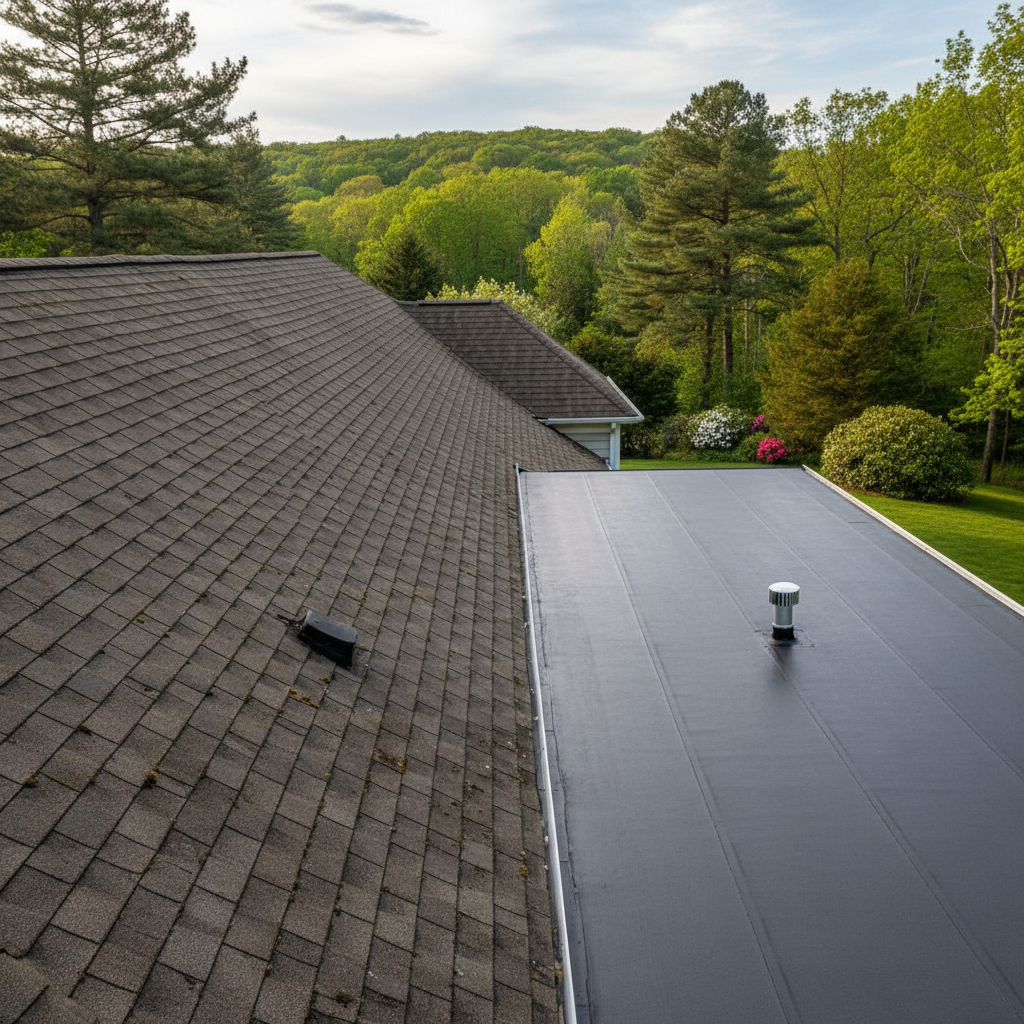
Alright, let's talk flat roofs. Not every home in West Greenwich is a sprawling colonial with a steep pitch, after all. Plenty of us have additions, garages, or even whole sections of our homes with low-slope or flat roofs. When it comes to these, you're usually looking at two main contenders for residential applications: TPO and EPDM. You've probably heard the names, but what do they actually mean for your wallet, and honestly, for your peace of mind?
TPO: The Newer Kid on the Block
TPO stands for Thermoplastic Polyolefin. It's a single-ply membrane, usually white, though you can get it in gray or tan too. This stuff has gotten super popular over the last couple of decades, and for good reason. One of its biggest draws? Energy efficiency. That white surface reflects a lot of sunlight, which can really help keep your attic or the space directly below cooler in the summer. That's a real plus when we get those humid, scorching August days here in Rhode Island, isn't it?
Installation involves heat-welding the seams together. This creates a really strong, monolithic bond. Think of it like melting plastic together — it basically becomes one piece. This means fewer potential leak points, assuming it's done right.
EPDM: The Tried and True Rubber Roof
Then there's EPDM, which is Ethylene Propylene Diene Monomer. Most folks just call it 'rubber roofing' because that's exactly what it looks like and feels like – a big, thick sheet of rubber. It's almost always black, which has its pros and cons. EPDM has been around for ages, proving its reliability on commercial buildings for decades before making its way more commonly into residential use.
Installing EPDM typically means adhering the membrane to the roof deck with a special adhesive. Then, we seal the seams with tape and primer. It's a different process than TPO's heat welding, but it's just as effective when handled by experienced pros.
Cost: What's the Damage?
This is usually the first question people ask, and that's fair. Generally, EPDM tends to be a bit less expensive upfront than TPO. The material itself can be cheaper, and sometimes the installation labor might be slightly less involved, depending on the specifics of your roof. However, the gap isn't as huge as it used to be, and prices fluctuate with material availability and demand.
You're probably looking at anywhere from $7 to $12 per square foot installed for either one, but that's a rough ballpark. Things like roof complexity, existing roof removal, and insulation needs can push that up. Seriously, don't cheap out here; a poorly installed flat roof is a nightmare, no matter what material you use.
Durability & Lifespan: How Long Will It Last?
Both TPO and EPDM are tough. We're talking 20-30 years easily if they're installed correctly and you do a little basic maintenance. EPDM has a long track record, so we know it holds up to our crazy New England weather – heavy snow loads, ice, freezing rain, and those wild wind gusts we get from the coast.
TPO is very durable too. It's usually more puncture-resistant than EPDM, which can be a factor if you've got trees dropping branches or if you're regularly walking on the roof for maintenance. It also handles UV radiation really well, which helps prevent it from breaking down over time.
Maintenance: Keepin' It Clean
Neither of these roofs needs a ton of fuss, which is great. You'll want to clear off any debris, especially after storms, and make sure your gutters are clear. That's pretty standard for any roof, right? For EPDM, because it's black, it can attract more algae or moss in shady, damp spots, especially if your West Greenwich home is surrounded by a lot of mature trees like we see in areas off Route 102. A good cleaning every few years can keep it looking good and prevent biological growth.
TPO's lighter color might show dirt more, but it's generally easier to clean. Just a good scrub with a mild cleaner and a brush usually does the trick. You'll want to check the seams on both types periodically, especially after a rough winter, just to catch any issues early.
Appearance: Looks Matter, Even on a Flat Roof
This one's pretty straightforward. EPDM is black. TPO is usually white, though gray and tan options exist. If your flat roof is visible from an upper window or a neighbor's house, the aesthetic might play a role. The white TPO can look cleaner and more modern to some, while the black EPDM is more traditional for a 'rubber roof' look.
My Recommendation for West Greenwich Homeowners
Honestly, both are solid choices. For most folks here in West Greenwich, I lean towards TPO, especially for residential applications. Here's why:
- Energy Efficiency: That reflective white surface really helps keep cooling costs down in the summer. With our recent heat waves, every little bit helps.
- Durability: It's incredibly tough against punctures and UV degradation, which means fewer worries about falling branches or general wear and tear.
- Seam Integrity: The heat-welded seams are incredibly strong. When done right by a company like Black Diamond Roofing, they create a virtually seamless barrier against water.
EPDM is still a fantastic, reliable product. If you're on a tighter budget or prefer the look, it's absolutely a viable option. But for long-term performance, energy savings, and overall robustness in our Rhode Island climate, TPO often edges it out.
Ultimately, the best flat roof for your home depends on your specific situation, budget, and priorities. Give us a call, and we can come out, take a look at your roof, and give you an honest assessment of what makes the most sense for your place. We're right here in West Greenwich, so we know these roofs and this weather inside and out.