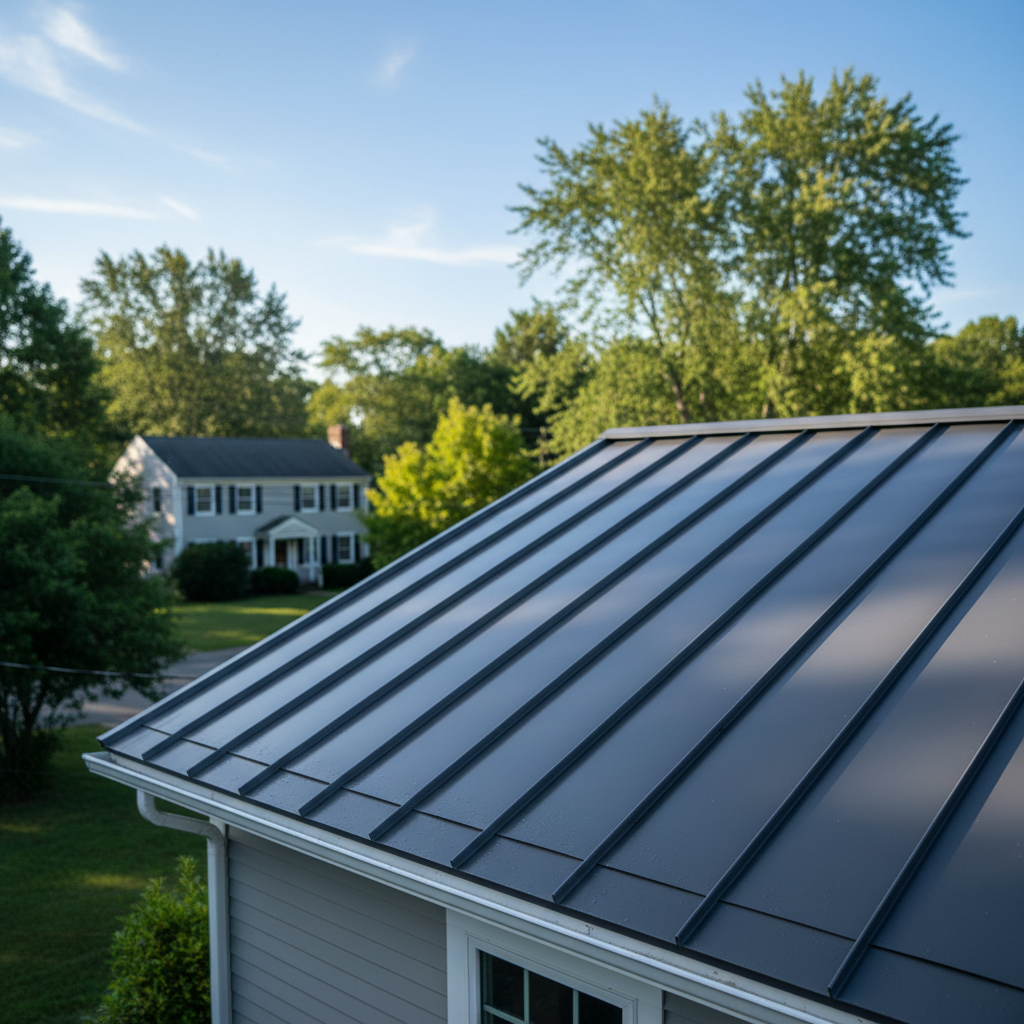
Is a metal roof really worth the extra cost up front?
That’s the first thing most folks ask me, and it’s a fair question. Yeah, metal roofs usually cost more than asphalt shingles initially. You’re looking at anywhere from two to three times the price per square foot, sometimes even more, depending on the material and how complex your roof is. But here’s the deal: you’re not just buying a roof; you’re buying peace of mind for decades. A good quality metal roof, put in right, can easily last 50 years or more. Asphalt shingles? You’re lucky to get 20-25 years out of them, especially with our tough New England winters. So, while the sticker price is higher, when you figure in not having to replace your roof every couple of decades, it often works out cheaper in the long run. Plus, there’s the energy efficiency, which can save you money on heating and cooling bills every single month. Pretty neat, huh?
Will a metal roof make my house sound like a drum during a rainstorm?
This is a common misconception, and I get why people think it. You picture rain hitting bare metal and imagine a racket. But for residential metal roofing, that’s not how it works. Most metal roofs go over a solid base, like plywood decking, and often have an underlayment that adds another layer of sound dampening. Your attic space and insulation also do a lot to soak up sound. So, no, your house won’t sound like a drum. You might hear a slightly different sound than with shingles, maybe a softer pitter-patter, but it’s rarely disruptive. In fact, some people even find the sound of rain on a metal roof quite soothing. It’s definitely not the loud, clanging noise some folks worry about.
How do metal roofs hold up to our crazy West Greenwich weather?
They hold up great, honestly. Better than most other materials, in my opinion. We get some serious weather here in West Greenwich, from heavy snow loads that sit for weeks, to ice dams, to those fierce nor'easters that blow through with high winds. Metal roofs are built for this. They’re incredibly durable. They shed snow and ice much more efficiently than shingles, which helps prevent ice damming. They’re also highly resistant to wind uplift — a properly installed standing seam metal roof isn’t going anywhere in a hurricane. Unlike shingles that can curl, crack, or blow off, metal panels lock together or fasten securely, making them incredibly tough. Hail? Most metal roofs can take a beating from hail without much damage, unlike asphalt that can get bruised or lose granules. It's why I recommend them so often for homes around places like Beach Pond, where you really want something that can stand up to the elements.
Are there different types of metal roofs? Which one is best?
Absolutely, there are several types, and